Wednesday, 24 January 2007

The Coffee Brewer's Ten Commandments

1. Thou shalt know your machine.
Whether it’s an expensive espresso machine or a simple french press it is important you learn as much as you can about the particular method. A good place to start is reading the instructions. Ok, you may already know how to use a french press, but the instructions can let you know exactly how it was intended to be used. Knowing the “ins and outs” of brewing can only make the final product that little bit better.

2. Thou shalt have basic machine hygiene
Hygiene of the machine is of vital importance. You can have the freshest, highest quality beans from your favourite origin and farm, but with a dirty brewer it will taste awful and not show the final drink at its best. It never ceases to surprise me visiting some high volume coffee shops that we supply, with some of the finest espresso machines money can buy, how dirty they allow their machines to become. Have a routine that suits you, but keep it clean at all costs. Something as simple as taking apart the mesh filter from a french press or cleaning the funnel on a moka pot can have huge benefits to your brew. Cleaning products like cafiza are widely available and help you keep your machine clean.

3. Thou shalt grind
The biggest asset to fine coffee is a quality grinder. If you buy nothing else, get a good burr grinder. Spending wisely at this stage can save the need for upgrade later (see coffee on a budget). Spending as much as you can will reap its rewards. “So should I buy pre ground coffee?” I hear you cry, and the simple answer is no. Without going into too much detail here, coffee when ground releases CO2. CO2 acts as a delivery service for all those lovely unique tastes. Once the CO2 is released those great tastes are stranded without a courier to deliver them to your tongue. Grind just before brewing (or as close to as you can). When I first became involved in coffee, I was once told as an experiment to grind coffee, and smell it straight away. Then after ten minutes return and smell again. In just ten minutes what was great coffee had become good coffee. Just imagine what days and months can do to it. Practice with your grinder to find the perfect grind for you and your machine. I have used many hundreds of kilos in the past “dialling-in” grinders but not a gram has been wasted. Don’t be afraid for the short pain for a long term gain, again there are rewards to be reaped.

4. Thou shalt use quality water
An underestimated factor in coffee brewing surprisingly is water. Considering it makes up to 99% of the drink, I’m amazed more attention isn’t paid to it. Fresh water is a must, for some machines it is imperative it goes through a softener, although in a recent experiment with a friend we discussed that overly soft water in some brewing methods is a bad thing. Filtered water is a good idea and even bottled water can be used with the correct amounts of calcium (low), if your mains water is particularly bad.

5. Thou shalt use the correct water temperature
I feel a contentious issue coming on here. There are many schools of thought here but for the sake of this article I’m right they’re wrong. Water should be just off boiling at around 95-97ºC. Too hot and it will taste nasty and bitter (boil the bean spoil the bean), too cold and you will not get a proper extraction which is vital in the pursuit of the perfect cup.

6. Thou shalt extract correctly
Just as important is the amount of time the water is exposed to the coffee grounds. With a drip brewer this isn’t as much of a problem (although making sure the grounds are evenly distributed helps) but, for example, with espresso or with a vacuum pot, boy is this important. I’m not going to go into each individual method and discuss this here, but hopefully over the next few months there will be an article for the most common brewing methods were this will be discussed. Again instructions will help you understand the perfect extraction time.

7. Thou shalt Drink it fresh
If I ever see a filter brewer with a hotplate I’m 99% sure the coffee is going to be bad. If I see my espresso pulled and sitting on the side whilst the others are pulled I’m fairly sure its not going to be good. The simple message here is to drink as soon as it’s brewed. If you must keep say filter or french press then putting it in a vacuum flask is best. Never re-heat, never keep warm with a hot plate.

8. Thou shalt only drink speciality coffee.

9. Thou shalt think about the farmer and workers who produced your coffee, whilst drinking it.

10. Thou shalt enjoy your coffee

Labels: , ,

Wednesday, 17 January 2007

Setting Up Your New Espresso Machine

Setting up your brand new espresso machine is an exciting time, but as with any new gadget, you should take a moment to read the instructions before you begin operating your machine. All of the machines we sell are virtually ready to brew when they arrive, but to ensure that first cup lives up to your expectations, you should follow these easy guidelines that will have your machine pumping out great tasting espresso in no time.

General Assembly
Though most machines come with little assembly required, removable parts like the drip tray and water reservoir may need to be put into place upon arrival. Also, when you unpack your new machine, check to see if any accessories have been stored in the empty reservoir for shipping purposes and remove them for installation. Keep in mind that it's a good idea to rinse out your reservoir to get rid of particles that may have accumulated in the packaging.

Quick Installation Tips
Though setting up your espresso machine is a fairly simple process, there may be a few small features you won't want to overlook. Machines with a 3-prong power plug should be connected to a compatible electrical outlet to ensure proper grounding. Also, be aware that many espresso machines have a master power switch somewhere on the back or side of the machine that must be turned on for the machine to function. For super automatics, once you've ensured your machine is hooked up properly it's time to fill up the bean hopper with your favorite coffee.

Water Filtration System
If your machine comes with a water filter or softener, be sure to consult your product manual on how to set it up. Usually you'll have to soak it in clean water for a short period of time before installing it, and many super automatics also include a water hardness test strip to help you accurately program your machine's water settings. Properly preparing and maintaining your water filter or softener is the best way to protect your boiler against buildup and ensure your espresso will always taste great.

Priming
Because espresso machines are shipped without water in the boiler, it's important to prime your machine to prepare it for the first shot. Priming involves pulling water into the boiler when you first turn on your machine in order to prevent excessive stress on your heating components and pump. Since priming is a procedure that varies greatly between brands, you should follow the specific guidelines found in the owner's manual. If you need priming instructions for your machine, email us to request a copy.

Keeping it Clean
For most machines, you'll be ready to make that coveted first shot after following these easy startup steps, and as a new owner you may want to read more about how to keep your machine running smoothly in the future. It's a lot of fun getting to know a brand new espresso machine, and whether you've purchased a super automatic, semi-automatic or manual machine, you'll want to follow a regular cleaning schedule to guarantee you'll get the best tasting espresso for years to come.

Labels: , , , , ,

Friday, 15 December 2006

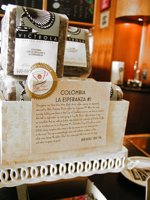
La Esperanza #1, how do we love thee?

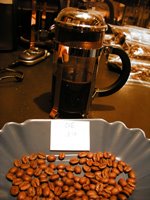
Our Colombia Cup of Excellence, La Esperanza #1, cupped out so beautifully this morning that we had to make a french press of it for ourselves in the roasting room. Mike “killed” on this roast and brought out everything we love about this coffee..big, juicy fruit, cranberry acidity, melon & honey. Coffees of this caliber don’t come along often. We are very proud to have it on our offering list.

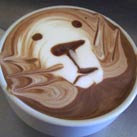
Latte art championship in the Netherlands


Wednesday, 13 December 2006

On Tasting Coffee and Sensory Memory

I was fortunate enough to learn the fundamentals of cupping coffee at Barry Jarrett’s elbow. Of the many, many things I learned from Barry, one really tattooed itself on my brain, and it has to do with how our perceptions of aromas and flavors can be deceptive, and how our attempts to describe those perceptions can be inadequate and confusing, ‘cause of everybody’s personal “taste histories”. By way of example, here’s a snippet of Barry’s thoughts in a thread in alt.coffee:

...take “grassiness”... is it fresh mown grass, dried grass, or plucked grass? bluegrass, fescue, or zoisia? is it the green bit at the top, or the whitish bit at the bottom. all these tastes are different, and yet all convey a sense of “grassiness” to the taster. and yet, one taster’s “grassiness” can be another’s “straw” or “hay” or something else.”

I don’t know about you, but simply reading that puts a whiff of fresh-mown lawn on the breeze, even in the middle of a Vermont winter. And this is certainly not the first time that simply reading about a particular sensory quality triggers an echo of it on my palate… just as actual aromas and flavors can trigger other, deeper and altogether unexpected memories.

Green Mountain’s Lindsey Bolger bolstered the concept of sensory experience and memory when she shared with me some of her experiences teaching coffee cupping in Rwanda. She found that many of the flavors and aromas that we so nonchalantly use to describe coffee’s characteristics—lemon or citrus brightness, cocoa or chocolate flavors, ripe and dried fruits—were entirely out of the Rwandans’ sensory experience. The aroma of steeping grains, however, brought about instant and terrible recollections of time spent in refugee camps during the height of the murderous Rwandan struggles.

Clearly, our experiences of aromas and flavors are deep-seated, personal, even visceral. Aromas, in particular, can elicit powerful memory responses—whether it’s the sweet smell of new-mown alfalfa, or the gruel served day after day after day in a refugee camp.

When I try to describe aromas and flavors I encounter in a cup I make every effort to be precise based on my own taste history. But it’s only by comparing notes with other people—people more knowledgeable than me—that I can hope to be accurate. Recently cupping with Lindsey I came to realize that what I have long described as a “woody” or “bark” flavor is what Lindsey describes as “fermenty”—precisely because it is the very flavor imparted to coffee by the fermenting process… and especially so when the coffee has spent a little too long fermenting. So’s that mean those coffees no longer taste to me like the bark of tree? No… ‘cause that’s deeply seated in my taste history… and in my memory. But I know now that I can describe a coffee as fermenty when I’m talking to coffee pros, and I can tell more casual coffee drinkers that it tastes kind of woody, and that’s likely because it was fermented too long.

Flavors and aromas and the persistence of memory… who knew coffee could affect us so deeply?

Wednesday, 29 November 2006

Creating a Mobile Coffee Shop

Admitted coffee addict, Dan Haller, may have gone too far when he mounted his Jura Capresso 1500 in the back of his Audi A6.

After anchoring the super automatic to the rear seats using Isofix brackets and running a 12-volt/110-volt inverter between the 60/40 rear split seats, Haller hit the streets. While this may seem like the answer for coffee-to-go, Haller said the espresso just didn't taste the same.

"The machine was too heavy to leave in the car long-term," he said. "And since the rear seats of the Audi slope back, it disturbed the normal flow of crema."

Haller did manage to take some pictures of the modification before removing the super automatic though. Another complaint of Haller's was the espresso could have been hotter.

Maybe he should have contacted rap superstar and car enthusiast Xzibit at MTV's Pimp My Ride before he called it quits.

Tuesday, 28 November 2006

Barista Coffee Preparation Techniques

In early April, skilled baristas from around the country poured into the Charlotte Convention Center hoping to pull a few perfect shots.

Twelve to be exact – four straight shots of espresso, four cappuccinos and four original, signature drinks. The United States Barista Competition is held once a year, and is sponsored by the Specialty Coffee Association of America and hosted by Krups. More than 60 baristas were involved in the competition this year according to Ted Lingle, Executive Director of the SCAA.
“Every year the baristas just keep getting better and better,” he said. “And each year the competition gets more aggressive.”

“The United States Barista Competition recognizes the skills and techniques of America’s best baristas and awards them with the highest honor anyone behind the counter could dream of – the coveted trophy, a $1,000 cash prize and an all expense paid trip to the World Barista Championship in Switzerland next month.

This year’s winner was Matt Riddle, a barista and training specialist at Intelligentsia Coffee, Chicago. Riddle, who has been a barista for more than four years, wooed the judges with his professionalism and presentation. The judges at this competition grade baristas on taste, presentation, skills and overall impression.

“His strength was his professionalism and taste really,” according to Chris Deferio, who placed 9th overall. Deferio, a competitor at this event, as well as winner of the Millrock Latte Art Competition in 2005, said that the USBC is much more difficult than any Latte Art competition. “There’s a lot more pressure,” he said. Deferio explained the judges at this competition take everything into account - including taste.

“You’ve got to have fresh coffee,” he said. “You’ve got to have a good grinder – preferably a burr-grinder. After that, its all practice,” Deferio said, as he explained how to create the perfect Rosetta. For Deferio, who began his career several years ago working with espresso pods and to-go cups, winning the 2005 Latte Art competition in Washington, D.C. was a tremendous accomplishment.

As latte art is catching on across the country, it is quickly being considered the ultimate ending to the perfectly prepared espresso-based drink. It’s the precise combination of rich, golden espresso and velvety, textured steamed milk, poured delicately into a cup, he said.

Industry expert David Schomer concurs. “The coffee flavor is enhanced by the micro-bubble texture that is essential to delineate the patterns in these pictures. As in many cuisines, presentation is inseparable from the substance.”

Many of the patterns that you see baristas make are created with free-pours, Schomer explains in his instructional video, Café Latte Art. In it, he discusses everything from milk texture to the importance of heavy crèma. Schomer emphasizes that in order for latte art to be successful, the espresso itself must be thick and the milk must be dense. By spinning the milk like a whirlpool in the frothing pitcher, super-dense micro-bubbles are formed – a necessity for beautiful latte art.

Having the ability to create Latte Art as a skilled barista is a learned technique, according to Lingle, who explained that Americans are rapidly catching up with European baristas. In time he hopes, American baristas will be on par with Europeans.

“Across Europe many people consider being a barista a career – not something to simply get through college. So we’ll just have to keep raising the bar.”

source: Whole Latte Love