Sunday, 30 April 2006

Caffeine aka Trimethylxanthine

Caffeine is known medically as trimethylxanthine, and the chemical formula is C8H10N4O2. When isolated in pure form, caffeine is a white crystalline powder that tastes very bitter.Medically, caffeine is useful as a cardiac stimulant and also as a mild diuretic (it increases urine production). Recreationally, it is used to provide a "boost of energy" or a feeling of heightened alertness. It's often used to stay awake longer -- college students and drivers use it to stay awake late into the night. Many people feel as though they "cannot function" in the morning without a cup of coffee to provide caffeine and the boost it gives them.

Thursday, 27 April 2006

Green Tea

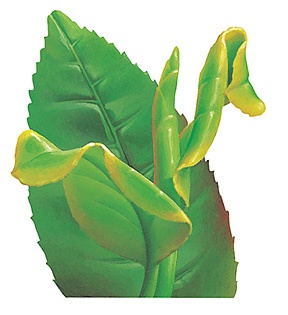
Green tea contains extremely powerful antioxidants, a range of catechins in particular, which protect against health problems such as cancer and cardiovascular disease. It also contains varying amounts of caffeine bound to tannins; the caffeine content depends on where the tea is grown. For some types of tea, the caffeine content is comparable to that of coffee. However, even the green teas with the highest caffeine content are much gentler on the body and the adrenals than coffee, the reason being that the caffeine is bound to the tannins in the tea, which ensures a somewhat slower rush of caffeine into the blood. The result is a much gentler and more sustained energy boost, compared to coffee and black tea. Also, you won't experience the energy downs you get from coffee, when the rush of caffeine suddenly stops as abruptly as it started. So for those having trouble getting through the day without coffee, which stresses the body's biochemistry, green tea is not merely an alternative, but an improvement. It can do what you want from coffee, but it has none of the negative effects.

Green tea also seems to increase fat oxidation to a level greater than what can be explained by its caffeine content alone. So green tea might also be good for weight loss when combined with a proper diet. The tannins in green tea have a beneficial effect on the GI flora; they inhibit the growth of pathogenic bacteria in the GI tract. One Japanese study showed antibacterial and even bactericidal effect against some types of pathogenic bacteria, which might attack the GI tract1.

Wednesday, 26 April 2006

Antioxidants

In biological systems, the normal processes of oxidation (plus contributions from ionizing radiation and pro-oxidant chemicals) produce highly reactive free radicals. These can readily react with and damage other molecules, including DNA in cell nuclei or mitochondria. In some cases, the body uses free radicals to destroy foreign or unwanted objects, such as in an infection or cancer. However, in the wrong place, the body's own cells may become damaged. Should the damage occur to DNA, the result could increase the possibility of cancer. Antioxidants decrease the damage done to cells by reducing oxidants before they can damage the cell. Antioxidants may be further classified by the products they form on oxidation (these can be antioxidants themselves, inert, or pro-oxidant), by what happens to the oxidation products (the antioxidant may be regenerated by different antioxidants or, in the case of "sacrificial" antioxidants, its oxidised form may be broken down by the organism) and how effective the antioxidant is against specific free radicals.

Free radical damage in the mitochondria of living cells is a byproduct of oxidative phosphorylation. Superoxide radicals are generated, which can damage mitochodria and mitochondrial membranes. Unlike DNA in the cell nucleus, mitochondrial DNA has only a few DNA-repair enzymes and the DNA is not protected by histones.Many antioxidants, however (including vitamin C and vitamin E) can't get into mitochondria for various reasons (e.g. because they are too hydrophilic to cross mitochondrial membranes or too hydrophobic to cross the cytoplasm). Melatonin is an important natural antioxidant that has been demonstrated to strongly protect mitochondria from damage . A group of scientists in Russia (led by V. Skulachev) have created a custom antioxidant (a Skulachev ion forms the point of the molecule and penetrates the mitochondrial membrane; the antioxidising part is attached behind it) that can enter the mitochondria and stays there due to the membrane potential gradient; preventing damage to DNA.

Coffee Jokes

This guy walks into a coffee shop and asks the waitress: "How much is the coffee?" "Coffee is three dollars the waitress said". "How much is a refill?" the man asked. "Free"!!!!! said the waitress. "Then I'll take a refill"!!!!!

Tuesday, 25 April 2006

The 23rd Psalm er... Cuppa

Some days you need a little humor in the morning. While worshiping at the altar de caffeine this morning, I ran across this. Henceforth it shall start my day.

The 23rd CupCaffeine is my shepherd; I shall not doze.It maketh me to wake in green pastures;It leadeth me beyond the sleeping masses.It restoreth my buzz.It leadeth me in the paths of consciousness for its name's sake.Yea, though I walk through the valley of the shadow of addiction,I'll fear no Equal for thou art with me;Thy cream and thy flavorings they comfort me.Thou preparest a carafe before me in the presence of Starbucks.Thou anointest my days with vigor; my mug runneth over.Surely flavor and aroma shall follow me all the days of my lifeand I will dwell in the House of Maxwell forever.Amen

Sunday, 23 April 2006

Coffee Machines

Gilkatho provides coffee machines and coffee services for people who enjoy coffee. Clubs, hotels, offices and businesses in Brisbane, Sydney & Melbourne can buy coffee, coffee equipment and accessories directly from us... ensuring massive savings, better coffee and superb coffee service in the process.

Please enjoy our NEW Online Shop, where you can now safely and securely purchase our fresh gourmet coffee products online (24 hours a day, 7 days a week) to make your online experience with Gilkatho easier and more enjoyable than ever.

Thursday, 20 April 2006

Cappuccino History

The word 'cappuccino' is the result of several derivations, the original of which began in 16th century. The Capuchin order of friars, established after 1525, played an important role in bringing Catholicism back to Reformation Europe. Its Italian name came from the long, pointed cowl, or cappuccino, derived from cappuccio, "hood," that was worn as part of the order's habit. The French version of cappuccino was capuchin, from which came English Capuchin. In Italian cappuccino went on to describe espresso coffee mixed or topped with steamed milk or cream, so called because the color of the coffee resembled the color of the habit of a Capuchin friar. The first use of cappuccino in English is recorded in 1948 in a work about San Francisco. There is also the story line that says that the term comes from the fact that the coffee is dark, like the monk's robe, and the cap is likened to the color of the monk's head.

Wednesday, 19 April 2006

Java Trivia

If you like your espresso coffee sweet, you should use granulated sugar, which dissolves more quickly, rather than sugar cubes; white sugar rather than brown sugar or candy; and real sugar rather than sweeteners which alter the taste of the coffee.

Tuesday, 18 April 2006

Parkinson’s Disease

At least six independent studies have confirmed a link between coffee drinking and the prevention of Parkinson’s Disease. The research shows that people who drink coffee on a regular basis are 60 to 80% less likely to develop Parkinson’s. Three of the studies also show that the more they drink, the lower the risk.

Sunday, 16 April 2006

Antioxidant Powerhouse

Probably the best kept secret about coffee is that it delivers more antioxidants than even the latest antioxidant bellwether, green tea. Green coffee beans contain about 1,000 antioxidants, and the brewing process adds 300 more. The roasting process, by the way, creates its own set of healthful compounds which, like some antioxidants, are unique to coffee alone.

Coffee, in fact, has four times the antioxidant content of green tea, according to a study conducted in Switzerland by the Nestle Research Center and recently published in the Journal of Agricultural and Food Chemistry. The study found that coffee also outruns cocoa, herbal teas and red wine. Of course, precise antioxidant content varies from cup to cup, depending on the type of bean (Robustas have twice the antioxidants of Arabicas, although the difference is reduced in the roasting process) and the level of “solubles” in the cup, determined by the brewing method, time and amount of coffee used.

The health benefits of antioxidants are broad, since the compounds neutralize errant molecules known as “free radicals.” These electrically unbalanced cells kill healthy cells as they try to stabilize themselves by robbing sub-atomic particles. This process has been implicated in premature aging, cardiovascular disease, degenerative brain disorders, cancer, cataracts, the decline of the immune and nervous system, and other health problems.

Saturday, 15 April 2006

Coffee

Coffee is a beverage, usually served hot, prepared from the roasted seeds of the coffee plant. These seeds are almost always called coffee beans. Coffee is the second most commonly traded commodity in the world, trailing only petroleum. A total of 6.7 million tonnes of coffee were produced annually in 1998-2000, forecast to rise to 7 million tonnes annually by 2010.[1] Coffee is one of humanity's chief sources of caffeine, a stimulant. Its potential benefits and hazards have been, and continue to be, widely studied and discussed.